Secure your future today!
Working Safely in Extreme Heat
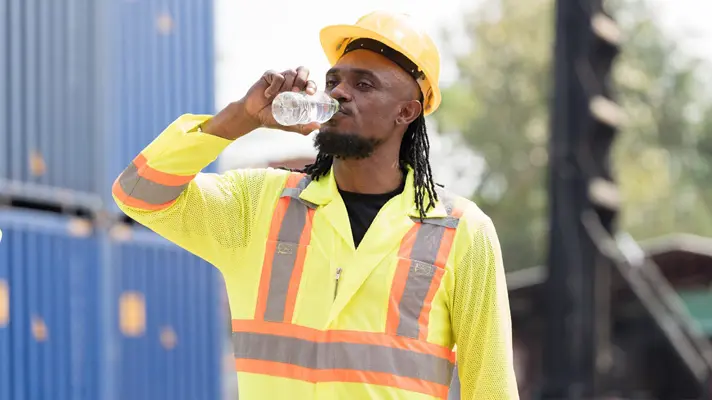
Why Heat Safety Matters:
Extreme heat can lead to serious illness, injury, reduced productivity, and even death. Every outdoor worker should understand heat hazards and preventive measures.
Recognize Heat Hazards
Information from OSHA, NIOSH, and National Weather Service (NWS) heat index guidance identifies the following as heat hazards:
- High temperatures combined with outdoor work can become hazardous when air temperatures exceed 80°F (27°C) depending on physical activity levels.
- High humidity, including 40% humidity and above, reduces the body’s ability to cool itself through sweating. The higher the humidity, the greater the risk.
- Direct sun and radiant heat from pavement, equipment, and metal surfaces can significantly increase heat exposure, making it feel 10–15°F hotter.
- Restricted air circulation, low wind speeds, enclosed outdoor spaces or trenches combined with PPE or heavy clothing can trap heat and increase worker heat exposure.
- Physically demanding work in industries such as roofing, construction, landscaping, utilities, and road construction increases heat stress risk and should be closely monitored.
Heat Hazard Prevention
- Recognize the signs: Know the signs of heat rash, heat cramps, heat exhaustion, and heat stroke, and act immediately if symptoms develop.
- Follow the basics: Provide water, rest, shade, and frequent breaks, especially during high heat.
- Plan work safely: Schedule strenuous tasks during cooler hours, rotate workers, monitor the heat index, and allow time for acclimatization.
- Reduce heat exposure: Use shade, cooling stations, ventilation, and mechanical equipment whenever possible to minimize physical exertion.
- Wear appropriate protection: Choose lightweight, breathable clothing, use cooling PPE when needed, and protect skin and eyes from the sun.
- Stay hydrated: Drink water frequently before and during work, replace electrolytes when needed, and avoid excessive alcohol, caffeine, and sugary drinks.
- Look out for each other: Supervisors should monitor conditions and enforce heat safety practices, while workers should use the buddy system and report symptoms immediately.
- Respond quickly to emergencies: Stop work, move the worker to a cool area, begin active cooling, call 911 for suspected heat stroke, and never leave the worker alone.
Download This Article
Additional Safety Topics
Check Out All Our Products
Commercial Insurance Built for You
We offer a wide range of Commercial insurance products. Find the product that's right for you!
Specialty Insurance
Commercial Auto Insurance Workers' Compensation Insurance Manufacturing Insurance Insurance for WineriesConstruction and Contracting
General Contractor Insurance Carpenters Insurance Plumbing Insurance Excavator Insurance Electrician Insurance HVAC Business Insurance Lawn Care Business InsuranceRetail and Service
Retail Business Insurance Barber Insurance Pet Grooming Insurance Florist Insurance Bakery Insurance Photographer Insurance Beautician Insurance Coffee Shop Insurance Funeral Home Insurance Janitorial InsuranceGet Insurance for Your Car and Home
You need to protect more than just your business. Get insurance for your personal property too!
Personal Lines InsuranceWe've Got You Covered!
We offer Personal Lines Insurance in five states: Ohio, Michigan, Illinois, Indiana, and Wisconsin.
Insurance for All Types of Farms
Hastings offers a range of products specifically designed for farmers.
Farm InsuranceWe've Got You Covered!
We offer Farm Lines Insurance in five states: Ohio, Michigan, Illinois, Indiana, and Wisconsin.
Secure your future today!

Hastings Insurance Company
404 E. Woodlawn Ave.
Hastings, MI 49058
Monday-Friday
8:00 a.m. - 4:30 p.m. (EST)
(800) 442-8277